Hairspray Live!

Mets like things outside of wx. Hey, we are human! (At least I am) And for me, from working in the media industry, I have gained a great appreciation for the “live performance”. In my opinion, there is nothing better than a great live performance, especially a great live vocal performance. And Hairspray Live! provided several of these great live performances.
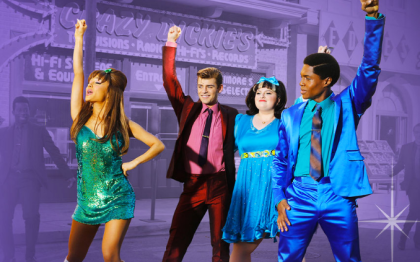
screen-shot-2016-12-28-at-12-46-40-am

Maddie Baillio (second from right) and three other cast members from Hairspray Live! 

Overall, I thought it was a very entertaining and fun live show. Did I like the Live! show better than the Hairspray movie? No, but it was still good.

I thought NBC did a good job with how they produced the show and cast the roles. For instance, Maddie Baillio, the young lady that was cast to play “Tracy Turnblad”, did really good job. Also, I really liked how the network featured local affiliates from around the country. I thought it was a good way to bring more of a local connection to the broadcast. Sometimes it can feel as if the national networks only focus on cities live New York and Los Angeles.

screen-shot-2016-12-28-at-12-47-53-am

Jennifer Hudson as “Motormouth Maybelle”

If I had to pick one person who stood out the most from the show, it would be Jennifer Hudson, who played “Motormouth Maybelle”. She was literally amazing, especially during her performance of the song, “I Know Where I’ve Been”.

The performance was powerful! She struck the right emotional tone and notes, and it was a performance that grabbed my attention and was something from which I couldn’t turn away. This is the audio from the live broadcast… https://youtu.be/sJKJjKXEldk.

Judge for yourself and let me know what you think. And if you haven’t had a chance to see the full show, I recommend checking it out. Here is a link to the Hairspray Live! broadcast … https://youtu.be/AIS3MNimO98
Why Wx?

For most mets, their interest in wx began with a specific wx event. Two of the big examples from the past 30 years include the Blizzard of 1993 in the Northeast and Hurricane Andrew in 1992.

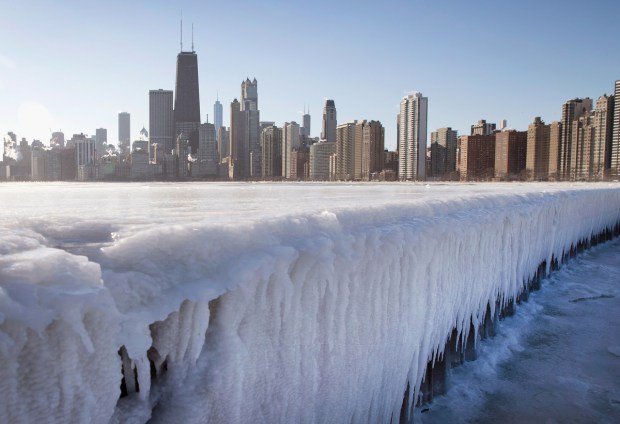
*** BESTPIX *** Temperatures Drop Near Zero Degrees In Chicago

Ice builds up along North Avenue Pier in Chicago while temperatures hovered around zero degrees Fahrenheit on January 7th, 2015. Scott Olsen/Getty Images

For me, I don’t believe my interest in wx came from one specific event, but I do remember growing up in the Midwest and living through some pretty intense winter storms. Many of these storms would drop 10 to 20 inches of snow, bring dangerously cold conditions and leave most people stranded in their homes for days.

In general, wx in the Midwest can be pretty intense. This region of United States can have intense blizzards in the Winter and sweltering heat waves in the Summer. During the Spring and Fall, strong thunderstorms and tornadoes can be a serious threat. The wx can also be quite nice. Temperatures comfortably in the 70s and 80s in the summer, beautiful cool and crisp days in the Fall and Spring, and a few mild days in the Winter.

If I were to put a year on when I noticed my interest in wx, it would have been around 1998, or age 12. At that time, I would visit my grandparents a lot and find myself watching The Weather Channel (TWC), especially when severe weather was occurring. For most of my childhood, outside of the local newscast, TWC was the main venue to get wx news.

A long with TWC, I would watch a NASA cable channel that provided a live feed of Earth from space. The narrator on this channel would point out wild fires that were visibility across other parts of the world, as well as hurricanes and severe wx systems visible from space.

I would also watch local news for wx coverage. I remember 1998 being a big year for wx as there was a very strong El Nino occurring. For those who don’t know, an El Nino represents the warm phase of the El Nino/Southern Oscillation (ENSO), which is an oscillation of the atmospheric and ocean temperatures of the tropical Pacific Ocean, west of South America. This oscillation can affect global weather patterns, and for the Midwest, El Ninos typically mean milder winters for the region. Every Chicago tv met covered the El Nino and its impact on our weather.

It wasn’t until I entered high school and was forced to seriously consider what I wanted to do for a career that I decided on a career as a met. And I thought I could be a good met. I enjoyed math, physics and chemistry. I was a good public speaker and generally enjoyed people. These were important skills needed to become a met, especially a broadcast met. That decision eventually led me to where I am today.

Maywood

screen-shot-2016-12-09-at-5-03-26-pm

When I first went away to college, and even early in my professional career, a lot of people would say, “you sound like you are from the South.”

Well, I am not from the South. I am originally from the Midwest, growing up in the suburb of Maywood, Illinois, a 10- to 15-minute drive from downtown Chicago.

Maywood is currently a low to middle income village that is mostly known for producing several professional athletes. These athletes include: Current LA Clippers Coach and retired NBA player Doc Rivers, retired NBA player Michael Finley, current NBA player Shannon Brown, former NBA player Stephen Hunter, Olympic hurdler medalist Greg Foster, Olympic swimming medalist Jackie LaVine, and current NFL player Sergio Brown, to name a few.

Other famous or notable people that were either born or spent time in Maywood include: BET co-founder Sheila Johnson, Black Panther Leader Fred Hampton, NASA astronaut Eugene Cernan, actor Dennis Franz, and folk singer and songwriter John Prine, to name a few.

One of the most interesting facts about Maywood is that the Underground Railroad went right through the village. A house that once stood at the southeast corner of 1st Avenue and Lake Street served as a place where runaway slaves could find refuge as they made their way north along the Des Plains River. On this site now stands a McDonalds restaurant, but inside the restaurant, you will find pictures and information that document the history of this site. You will also find an outdoor commemoration of the site.

And my “southern sound,” for me at least, was due to growing up with my family and others with southern roots. Many of my childhood friends had relatives and family members in Arkansas, Tennessee, Mississippi and Alabama. Even my great grandmother used to pick cotton in the south before moving north. This fact is represented in the population history of Chicago and its suburbs, with a lot of African-Americans migrating from the South to the urban areas of the Midwest, as well as to urban areas of the West and Northeast, roughly from 1910 to 1970. This migration was known as the Great Migration.

You will find a lot of this information online about Maywood, its history, its pros, its cons, but for me, Maywood is more than just facts and statistics. Its a place I will always call home, a place where I have good memories and bad ones, and its a place that helped shape and mold me into the person I am today.


Terminology

16720060-abstract-word-cloud-for-terminology-with-related-tags-and-terms-stock-photo

Hello again!

One of the things I think will be helpful to anyone reading this blog is clarification of terminology used in blog posts. Below you find a list that will likely grow over time but I hope will be helpful and useful to readers.

Met – Meteorologist. For the purpose of this blog, met will be shorthand for meteorologist

Wx – Weather. It is common knowledge among meteorologists and weather enthusiasts that wx is shorthand for weather

Broadcast Met – Broadcast Meteorologist


My First blog post

Hey Everyone,

Welcome to my blog. My name is Marcus Walter and I am a meteorologist, or met, for short. The purpose of this blog is to share my experiences working as a meteorologist in the media industry, but also to showcase my other interests from general broadcasting to food, movies, books and entertainment.

I hope you enjoy this blog.